Turning fifty does not mean you have to stop moving. It means you get to be smarter about how you move. The workouts that worked in your twenties and thirties often stop working in your fifties, not because you are weaker, but because your body has different needs now. Joints want less pounding. Muscles want more attention. Balance becomes something you have to practice, not something you take for granted.
Low impact workouts are not easy workouts. That is the first thing to understand. Low impact simply means one foot stays on the ground at all times. There is no jumping, no hopping, no sudden jars that travel up your legs and into your back. You can still sweat. You can still build real strength. You can still feel your heart pump. What you leave behind is the wear and tear that high impact exercise puts on a body that is low impact workouts for women over 50.
This guide is for the woman who wants to stay active for decades, not just weeks. It covers why low impact works so well after fifty, which specific exercises deliver the most benefit, how to put them together into a routine, and how to stay safe while making real progress.
Why Low Impact Makes Sense After Fifty?
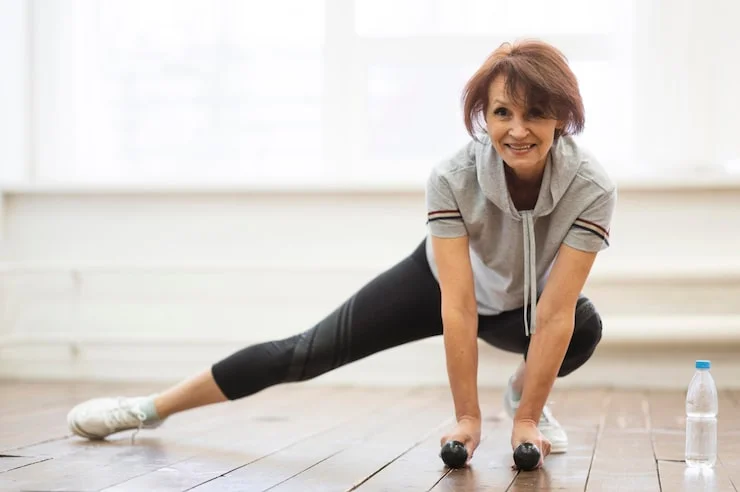
Something happens to women's bodies around menopause that changes the fitness conversation entirely. Estrogen levels drop, and that drop affects almost everything. Muscle mass starts to decline more quickly. Bone density becomes a real concern. Joints feel stiffer in the morning. Tendons and ligaments lose some of their elasticity, which means they do not bounce back from strain the way they used to .
This is not a reason to give up. It is a reason to change the approach.
High impact exercise, the kind with running and jumping, sends force through your joints with every landing. For a twenty-year-old with strong bones and springy cartilage, that force builds stronger bones. For a fifty-five-year-old going through menopause, that same force can contribute to stress injuries, joint pain, and in some cases, worry about falling.
Low impact training sidesteps that problem. Research on women in their forties, fifties, and sixties has shown that a twelve-week low impact program using resistance bands and bodyweight exercises led to meaningful increases in lower-body strength, balance, and lean muscle mass . A separate study followed women through the menopause transition and found that low impact resistance training improved hip function and lower body strength by nineteen percent, full-body flexibility by twenty-one percent, and balance by ten percent, all without adding body mass .
The message is clear. You do not need to pound your body to make it stronger. You need to challenge it in ways that respect where it is right now.
Read Also: How to Lose Belly Fat at Home for Women Naturally
The Real Benefits You Can Expect
Low impact workouts deliver specific benefits that matter enormously for women over fifty. Understanding these benefits helps you stay motivated when you would rather sleep in.
Stronger bones without the pounding. Weight-bearing exercise tells your bones to hold onto density. But weight-bearing does not have to mean jumping. Squats, lunges, and even brisk walking send that signal. When you combine low impact movements with resistance, whether from bands, dumbbells, or your own body weight, you give your bones the load they need to stay strong without the fracture risk that comes with high impact falls .
Joints that feel better, not worse. Every movement in a low impact workout keeps at least one foot grounded. That means your knees, hips, and ankles are not absorbing landing forces. For women dealing with arthritis or general joint stiffness, this is not a small thing. It is the difference between exercise feeling like punishment and exercise feeling like something you can actually keep doing .
Balance you can trust. Falls are one of the biggest threats to independence as women age. Balance is not a fixed trait. It is a skill you build. Low impact training that includes single-leg movements, controlled transitions, and stability work trains your body to catch itself when it stumbles. That matters more than almost anything else for staying independent .
A heart that stays healthy. Moderate intensity movement, the kind that raises your heart rate without leaving you gasping, is strongly linked to lower risk of heart disease, stroke, and diabetes. You do not need to sprint. You need to move consistently, and low impact cardio like brisk walking, swimming, or cycling gives you that without the recovery cost of high intensity work .
Muscle that protects your metabolism. Muscle mass declines with age, and that decline speeds up after menopause. Less muscle means a slower metabolism and a harder time maintaining a healthy weight. Resistance training, even the low impact kind, tells your body to hold onto muscle. That is not about vanity. It is about function, metabolism, and long-term health .
The Best Low Impact Exercises for Women Over Fifty
You do not need a gym full of equipment. You need a handful of movements that work the major muscle groups, challenge your balance, and can be adjusted as you get stronger. Here are the exercises that trainers consistently recommend for this stage of life.
Squats
Squats strengthen your legs and hips, which are the muscles you use every time you stand up from a chair, get out of a car, or climb stairs. They are one of the most functional movements you can practice.
Stand with your feet about shoulder-width apart. If you feel wobbly, stand in front of a chair and reach your hips back toward it as you bend your knees. Keep your chest lifted and your knees tracking over your toes. Lower as far as feels comfortable, then press through your whole foot to stand back up. You can do these with no weight at first, then add a dumbbell held at your chest when bodyweight becomes easy .
Glute Bridges
Your glutes and hamstrings support your lower back and help you move through the world with power. Glute bridges train those muscles without putting any load through your knees.
Lie on your back with your knees bent and feet flat on the floor, about hip-width apart. Press through your heels and lift your hips until your body forms a straight line from shoulders to knees. Squeeze your glutes at the top, then lower slowly. Do not arch your lower back. If you feel it in your back instead of your glutes, tuck your pelvis slightly before you lift .
Wall Push-Ups
Upper body strength matters for carrying groceries, pushing doors open, and catching yourself if you trip. Traditional push-ups can be hard on wrists and shoulders. Wall push-ups give you the same training effect with far less stress.
Stand facing a wall, about arm's length away. Place your hands on the wall at shoulder height, slightly wider than your shoulders. Bend your elbows to bring your chest toward the wall, keeping your body in a straight line. Press back to the start. As you get stronger, move your feet further back or use a counter instead of a wall to increase the challenge .
Rows
Pulling movements like rows strengthen your upper back and help you stand taller. They counteract the forward rounding that happens from years of sitting at desks, driving, and looking at phones.
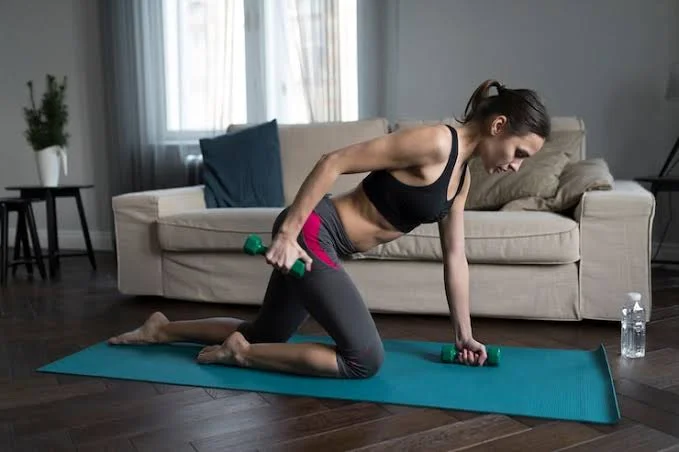
Hold a dumbbell in each hand or use a resistance band anchored at chest height. Hinge slightly forward at your hips, keeping your back flat. Pull your elbows back toward your ribs, squeezing your shoulder blades together. Lower with control. The key is to feel the work between your shoulder blades, not in your lower back .
Wall Sits
Wall sits build endurance in your legs without any joint movement at all. That makes them especially useful if your knees feel sensitive.
Stand with your back flat against a wall. Walk your feet out about a foot and a half, then slide your back down the wall until your knees are bent at a comfortable angle. Hold for as long as you can maintain good form, then slide back up. Start with fifteen or twenty seconds and build from there .
Brisk Walking
Walking is the most underrated exercise in the world. It requires no equipment, no learning curve, and no recovery time. Walking at a pace that makes you breathe a little harder but still allows you to talk is moderate intensity cardio, and it is enough to support heart health, bone density, and mood .
The key is the pace. A leisurely stroll is lovely, but it does not do much for your fitness. Push yourself to a pace where you feel slightly warm and slightly challenged. If you can sing, you are going too slow. If you cannot speak in sentences, you are going too fast. Aim for the middle ground.
Swimming and Water Aerobics
Water supports your body weight, which means you can work hard without loading your joints at all. For women dealing with arthritis or recovering from injury, water exercise is often the best option available.
Swimming laps at a comfortable pace builds cardiovascular fitness and upper body strength. Water aerobics classes add resistance through the water and often include social connection, which matters more than people realize for sticking with an exercise habit .
Tai Chi and Gentle Yoga
These practices build balance, flexibility, and body awareness in ways that translate directly to daily life. Tai chi in particular has strong evidence behind it for improving coordination and reducing fall risk. A study on older women found that a low impact yoga program reduced episodes of urinary incontinence by about sixty-five percent, which is a benefit most people would never think to associate with exercise .
You do not need to twist yourself into complicated poses. Gentle flows, standing balance work, and slow controlled movements give you the benefits without the risk of overstretching or straining something.
How to Put It All Together?
Knowing the exercises is one thing. Knowing how to combine them into a routine that fits your life is another.
Aim for three to four days of movement each week to start. Two of those days should include strength work, meaning the squats, bridges, rows, and push-ups. One or two days should be cardio, like a brisk walk or a swim. If you can add a short balance and flexibility session, even ten minutes of tai chi or stretching, that is a bonus that pays off in how you feel every day.
Here is a simple weekly template that works for most women starting out:
Monday: Strength session. Do two sets of each exercise: squats, wall push-ups, rows, glute bridges, and wall sits. Rest as needed between sets. The whole thing takes about twenty-five minutes.
Tuesday: Walk at a brisk pace for twenty to thirty minutes.
Wednesday: Rest or gentle stretching.
Thursday: Strength session, same exercises as Monday. Try to add one more repetition to each set compared to Monday.
Friday: Walk, swim, or do a gentle yoga or tai chi video.
Saturday and Sunday: Rest or do something enjoyable that involves movement, like gardening or a longer walk with a friend.
This is a starting point, not a rulebook. Some weeks you will do more. Some weeks you will do less. The goal is consistency over months and years, not perfection in any single week.
Read: Best Bodyweight Hamstring Exercises
Staying Safe While Making Progress
Safety is not about being timid. It is about being smart enough to keep showing up.
Talk to your doctor first if you have any health conditions. This is especially important if you have heart disease, osteoporosis, joint replacements, or balance issues. A doctor can tell you what to avoid and what to prioritize.
Start with less than you think you should. The most common mistake is doing too much too soon, then getting sore or injured, then quitting. Begin with one set of each exercise instead of two. Walk for fifteen minutes instead of thirty. You can always add more. You cannot always undo an injury.
Pay attention to pain. Muscle effort feels different from joint pain. Muscle effort is a burning sensation that fades when you stop. Joint pain is sharp, localized, and does not feel like effort. If something hurts in a way that feels wrong, stop. Soreness the next day is normal. Pain during the movement is not .
Warm up and cool down. Five minutes of gentle movement before you start, like marching in place or shoulder circles, prepares your body for work. Five minutes of stretching after you finish helps you transition back to the rest of your day. These minutes are not optional extras. They are part of the workout .
Wear the right shoes. This sounds small but it matters. A supportive athletic shoe with a stable sole gives you a better base for every movement you do. Worn-out shoes with no cushion or support make everything harder and less safe.
The Mental Side Matters Too
Exercise after fifty is not just about muscles and bones. It is about proving to yourself that you are still capable of getting stronger. That matters for how you see yourself and how you move through the low impact workouts for women over 50.
Many women find that low impact training becomes something they look forward to, not something they dread. There is no fear of injury. There is no recovery day needed. There is no feeling of being beaten up by a workout. Instead, there is the quiet satisfaction of finishing a session and feeling better than when you started.
That feeling is what keeps you coming back. And coming back, week after week, is the only thing that actually creates change.
Conclusion
You do not have to do all of this perfectly. You do not have to do all of this at once. Pick one exercise from this guide and do it today. Just one. A set of squats while the kettle boils. A glute bridge before you get into bed. A ten-minute walk around the block.