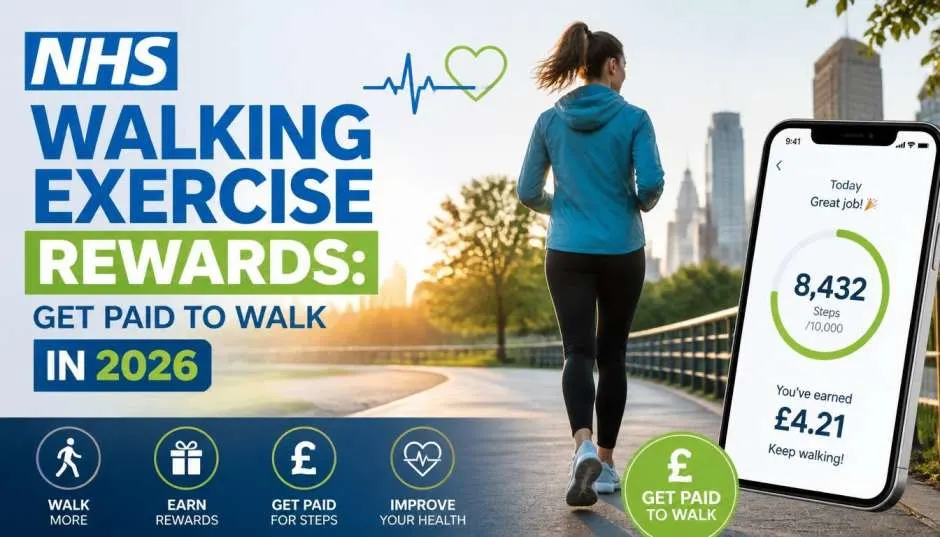
I first heard about the new NHS walking scheme last week. My initial reaction was disbelief. The NHS actually paying people to exercise? That seemed too good to be true. Then I read the BBC announcement. The scheme is real. And it launches next year . Here is what I discovered after digging through all the details.
The New NHS Walking Rewards Scheme
NHS England is launching a "marathon a month" challenge early next year . The target is straightforward. Walk around 30 minutes every day. That adds up to roughly 26 miles per month. The distance of a full marathon .
Users log their walks through an app, smartphone, or smartwatch . Completing the challenge unlocks rewards. The NHS says these could include discounts and vouchers .
This is the first time the health service has offered rewards for exercising . The scheme taps into "streak culture" . The same habit-forming behaviour seen on apps like Snapchat and Duolingo .
The funding model: The NHS covers initial setup costs. The long-term plan relies on corporate sponsorship and philanthropic donations . Full details of the voucher system come in the next few months.
You may also read :- The Virabhadrasana 2: How To Perform
Why the NHS Is Doing This?
The numbers are sobering. Physical inactivity is linked to one in six deaths in England . A person is classified as inactive if they do less than 30 minutes of moderate exercise per week .
A Sport England survey found nearly a quarter of adults fall into this category. That is roughly 12 million people . The scheme is part of England's 10-year health plan . Former Olympic medallist Sir Brendan Foster is the public face. He founded the Great North Run. NHS England asked him to create this campaign .
His message is refreshingly simple. "I'm known for running, but the ambition here is far simpler. We just want people to walk. Simple," he told the BBC .
The health impact: Sir Brendan says someone walking 30 minutes five times a week could gain up to four extra years of healthy life . The aim is to sign up more than 100,000 people . If they hit that target, he says it would be the biggest marathon in history .
Does Walking Everyday Count as Exercise?

Yes. Walking absolutely counts as exercise. The NHS is explicit about this. The scheme is built on solid medical evidence. The UK Chief Medical Officers' guidelines recommend at least 150 minutes of moderate intensity activity per week. That includes brisk walking .
The Active 10 app: This is the NHS's existing walking tracker. It is free on the App Store and Google Play . The app is built on the principle that a brisk 10-minute walk daily delivers multiple health benefits . You earn rewards for every brisk minute achieved .
App performance: The NHS Active 10 app has been downloaded over 1.7 million times . It supports over 95,000 monthly active users . A time series analysis from 2024 shows the average user increases their daily brisk walking by nine minutes immediately after downloading the app .
User reviews: The app has 4.7 stars on the App Store from over 50,000 ratings . One reviewer called it "an excellent and easy to use app for motivating us non-runners." Another said "a virtual gold cup is awarded for every brisk 10 minute walk you achieve" .
How the Rewards System Works?
The scheme uses streak culture to build habits. Not wanting to break a daily streak is a powerful motivator . The rewards provide extra incentive.
What people are saying: I read comments from people the BBC spoke to. Lauren Andrew said the format appeals to her because it does not require a gym membership . "I don't have a gym membership or any of that but I could go for a walk. That's free," she said .
But she was clear about incentives. Discounts alone would not cut it. She wants rewards that convert into something tangible like food or drink .
Under-25s were broadly upbeat. One said the gamified challenge would push her to be more active. Not wanting to break a streak is a real motivator for her and her friends .
The reality check: Sonia Pombo from Action on Salt & Sugar welcomed the initiative. But she warned against treating it as a standalone fix. The government must pair such initiatives with stronger prevention measures .
NHS Slipped Disc Exercise: Swimming and Walking
For anyone with back pain, the NHS recommends specific exercises. A slipped disc, also called a prolapsed or herniated disc, is when a soft cushion of tissue between the bones in your spine bulges outwards .
The NHS advice: If the pain is very bad, you may need to rest at first. But you will get better more quickly if you gradually start doing gentle exercise. The NHS recommends walking, swimming, and yoga as soon as you can .
The key principle: The type of exercise is not important as long as it does not cause pain or make your back pain worse . Walking is often the gentlest option. Swimming removes weight from the spine entirely.
What I have learned: The Active 10 app can help with this. You start gradually. You build up slowly. The app rewards every brisk minute. That encouragement helps you stay consistent without overdoing it.
Benefits of Walking 45 Minutes a Day
The scheme asks for 30 minutes. But experts say longer walks deliver more benefits.
Weight loss: Cedric Bryant, president of the American Council on Exercise, recommends walking at least 45 minutes per day most days of the week for weight loss. He suggests breaking it up into chunks. 30 minutes in the morning, 15 minutes after dinner .
Cognitive benefits: Walking daily at a brisk pace significantly boosts cognitive performance in people over age 60. It slows the normal age-related shrinkage of the hippocampus, the part of the brain that consolidates short-term memory .
Mood improvement: Going for a brisk walk is a great way to clear your head and improve your mood . A brisk walk is as effective as some antidepressant medications in treating mild to moderate depression.
Cardiovascular health: Just ten minutes of brisk walking every day can get your heart pumping. It lowers your risk of serious illnesses like heart disease and type 2 diabetes .
The bottom line: Walking is one of the best investments you can make in your long-term health. No medication on earth can do all this.
The Honest Limitations
Let me be straightforward about this.
The rewards are not confirmed yet. The NHS is still finalizing the voucher system . We do not know exactly what participants will get. This was announced on July 1, 2026 .
Corporate funding is not secured. The NHS covers the initial setup. But the long-term plan depends on attracting sponsors . If corporate backing falls through, the rewards might change.
Streak culture does not work for everyone. Not everyone is motivated by gamification. Some people need different types of encouragement.
Walking alone is not a complete solution. Sonia Pombo welcomed the initiative. But she cautioned against treating it as a standalone fix .
My Final Take
The NHS walking exercise rewards scheme is a smart idea. It targets inactive people who need a gentle push. The 30-minute daily target is achievable. The rewards provide extra motivation.
I have been using the NHS Active 10 app for a week. The pace checker is helpful. Earning virtual badges is surprisingly motivating.
What I have learned: Walking is underrated. It is accessible, free, and effective. The health benefits are well-documented. If a rewards scheme gets more people moving, that is a win.
What concerns me: The funding model is uncertain. Corporate sponsorship might not materialize. Rewards might be underwhelming. But even without the prizes, walking is worth doing.
The scheme launches next year. I will be signing up. The rewards are a nice bonus. But the real prize is better health.