I remember standing in front of the squat rack for the first time, feeling completely lost. There were so many machines, so much advice, and so many conflicting opinions. I just wanted to know one simple thing: 7 exercises to build muscle that actually work.
After years of training, making mistakes, and learning from some incredible coaches, I finally cracked the code. You don’t need a gym full of fancy machines or a two-hour block every day. You need consistency, proper form, and the right seven movements.
Today, I’m sharing the exact blueprint I still use. These are the best exercises for muscle growth that target your major muscle groups and have stood the test of time in my own routine.
Why These Seven?
It is of the essence to discuss why I selected such moves before proceeding. They aren’t random. These are complex exercises. It is to say that they use several joints and a variety of muscles simultaneously. A squat is not only a leg exercise, but it is also a workout of my core and back. The key to effective strength training.
We will target the best use of money in the gym, which results in improved muscle hypertrophy (this is merely a fancy word for growth) and working strength that will enable me to carry groceries or play with my children.
I would start with my list of 7 exercises to build muscle.
You may also read :- Strength Training for Bodybuilding Explained by Fitness Experts
The 7 Exercises to Build Muscle: My Step-by-Step Guide
These I have subdivided as I think of them in the gym: lower body, upper body, and the big daddy, full-body movements. Take your water bottle, and visualize them.
1. The Barbell Back Squat (The King of Leg Day)
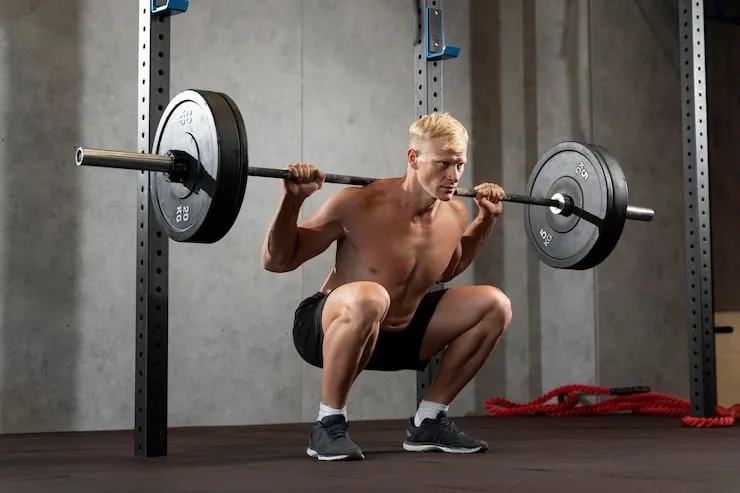
This would be my choice of the only lower body exercise to perform. There is no compromise on the squat. It develops crude strength in my limbs and buttocks.
What it works: Quads, hamstrings, glutes, and core.
My Form Cues:
- I placed the bar on my traps (top part of the back), not on the neck.
- I can picture myself nailing my feet into the floor with my feet shoulder-width.
- And my head is high, and I hold my shoulders up.
- Now I sit down, like I was opening the butt of a chair, till my thighs are at least parallel with the floor.
- To stand up I drive through my heels.
Quote of Expert: Squeezing muscles of both the upper and bottom body parts, including glutes, quads, hamstrings, and calves, the squat is crowned as the king of exercises. Squatting with a complete range of motion is important to build their legs to the maximum. - Coach Alain Gonzalez
2. The Conventional Deadlift (The Ultimate Full-Body Builder)
Frankly speaking, the deadlift is not easy but is satisfying. It also teaches you how to remove things on the floor that are heavy without falling on yourself, and this is a practical lesson. It is the final challenge of functional strength.
What it works: hamstrings, glutes, back, and traps, as well as forearms.
My Form Cues:
- I extend my hand to the bar in such a manner that it passes down in the middle of my feet.
- I stoop and hold up the bar just before my knees.
- I hitch up my hips and my shoulders. I must have no rounding on my back!
- I inhale heavily and set the world aside with my legs.
- I put my buttocks up and squeeze them.
3. The Flat Barbell Bench Press (Building a Strong Chest)
I confess it: I am fond of bench press day. It is pleasant lying on that bench and pushing heavy weight. It forms the foundation of the upper body strength.
Works: chest, front shoulders, and triceps.
My Form Cues:
- I am lying on the bench, and my eyes are under the bar. I open my shoulders and pull them together like there was a pencil between them.
- I hold on to the bar just a little more than shoulder width.
- I unrack it and slowly bring it down to my lower chest.
- I feel and release and slam the bar back into position.
4. The Pull-Up (Sculpting the V-Taper)
At the beginning I was not able to do a single pull-up. Zero. Bands and assisted machines were used until I received my first one. So, they are my favorite exercises for the back. They are difficult, and they make that great V-shape.
What it works: middle back, biceps, and lats.
My Form Cues:
- I hold the bar with palm-outward hands with a minor separation from the shoulder.
- I suspend myself dead, and then I use my lats (imagine I am pulling down my shoulders).
- I lean my breast to the bar, my elbows first.
- I get down gradually and in a restrained manner.
Pro Tip: You should not be worried when you are a beginner, such as I was. Begin with negative pull-ups (jump up and drop slowly) or resort to a resistance band. Loyalty will take you there.
5. The Barbell Row (The Posture Fixer)
I am at a computer most of the time, and this hunches my shoulders in front. Barbell rows are my antidote. They work on the posterior chain and enable me to stand erect. This action plays an important role in enhancing posture.
What it works: The upper back, the lats, and the rhomboids.
My Form Cues:
- My grip on the bar is overhand.
- I flex my hips, and I make my back flat (nearly perpendicular to the floor).
- I just begin drawing the bar in towards my lower chest and squeeze the shoulder blades together on the top.
- I bring the bar down again under control.
6. The Overhead Press (Building Boulder Shoulders)
The practice is good, as it pops your shoulders. It is also one of the most difficult, hence my love. It develops solid shoulder stability.
What it works: Triceps and shoulders.
My Form Cues:
- I place the bar on a rack at shoulder height.
- I flex my buttocks and stabilize my trunk.
- I put the bar as overhead as possible before my arms are locked out.
- I carry it down to my shoulders.
7. The Dumbbell Lunge (Fixing Muscle Imbalances)
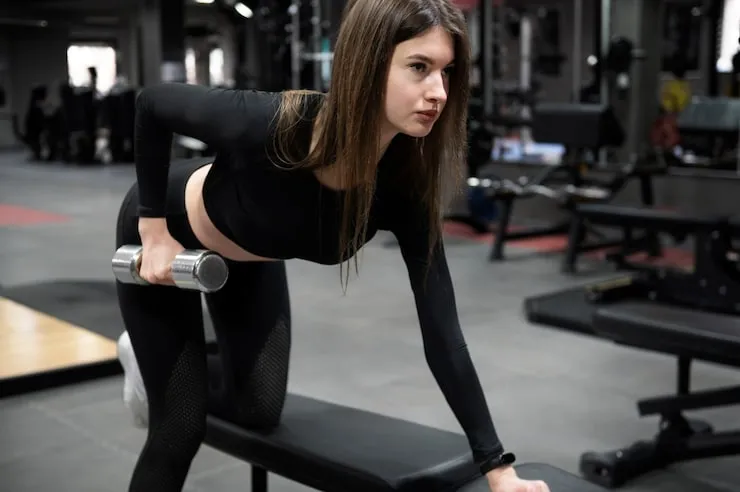
Lunges are humbling. They demonstrate to me which leg is really a strong one and which one is lazy. This is a unilateral activity (one leg at a time), which is essential to proper development.
What it works: Quads, hamstrings, glutes, and balance.
My Form Cues:
- With one leg, I take one step, holding a dumbbell in each hand.
- I bring the hips down to a 90-degree angle of both knees. My knees are lifted, and the back knee is high above the ground.
- The knee in front of me remains positioned just above the ankle—it does not cave.
- I jump back with the front foot to go back to the starting point.
How Do I Put It All Together (Without Overthinking)?
Knowing the moves is step one. Doing them is step two. The frequency of workouts and progressive overload are what I consider when organizing my week. Progressive overload is simply an intelligent way of saying, "Do a little more as you go along." I could either add 2.5 kg to the bar, another repetition, or another set. It is this incessant challenge that triggers muscle growth.
Here is a simple split. I apply it when I lack time but need to achieve the best results:
Workout A (Full Body):
- Barbell Squats: 3 sets of 5 reps
- Bench Press: 3 sets of 5 reps
- Barbell Rows: 3 sets of 8 reps
Workout B (Full Body):
- Deadlift: 1 set of 5 reps (get heavy, develop perfect form)
- Overhead Press: 3 sets of 5 reps
- Pull-Ups: 3 sets to failure (with assistance as required)
- Lunges: 3 sets of 10 reps per leg
I do change these exercises and visit the gym 3-4 times per week. The rest and the recovery are equally vital as the exercise itself. I do not train the same groups of muscles on consecutive days.
Common Mistakes I Made (So You Don’t Have To)
I have stretched myself, put my back to work, and spent months in bad habits. Learn from my pain.
1. Ego Lifting (Using Too Much Weight)
I was trying to lift heavy in order to be cool. I had appeared like a shaky mess. You can never beat heavy by form. When you are not able to control the weight, then it is too heavy.
2. Skipping the Warm-Up
I would come inside and just load the bar. Bad idea. I currently take 5-10 minutes to perform dynamic stretches and light cardio to also move the blood. It prevents injuries.
3. Ignoring Nutrition
You can’t out-lift a bad diet. I was forced to understand that protein consumption and calorie consumption in general power my exercises and restore my muscles. In case I intend to grow, I must eat well.
Frequently Asked Questions
How many days will I need to achieve results?
The changes were observed in the mirror after approximately 8-12 weeks of regular training. However, to be anywhere honest, I felt better after about 3 weeks. Trust the process.
Do I need to take supplements?
No. These are referred to as supplements after all. They supplement a good diet. My attention is first on having sufficient protein in food. A protein powder cannot replace magic, but it is helpful.
Can women do these exercises?
Absolutely! I have one of my training partners, a lady who overpowers me in deadlifts. Such exercises do not cause you to be bulky unless you consume a huge caloric excess. They mold and make good bones and a sound heart.
What if I can’t do a pull-up?
Assisted pull-up machines or bands are used, or simply the negative part of the movement (jumping up and lowering yourself slowly). You will get there.
Conclusion: Your Journey Starts Now
There you have it. The 7 muscle-building exercises that changed my body and my confidence. It is not about being perfect; it is about appearing. Start with the empty bar. Pay attention to the muscle contraction. I believe in you. And if I can transform that lost man standing in front of the squat rack into a strong and capable man, so can you. Now, go get those gains.